
Seeing the world in Systems
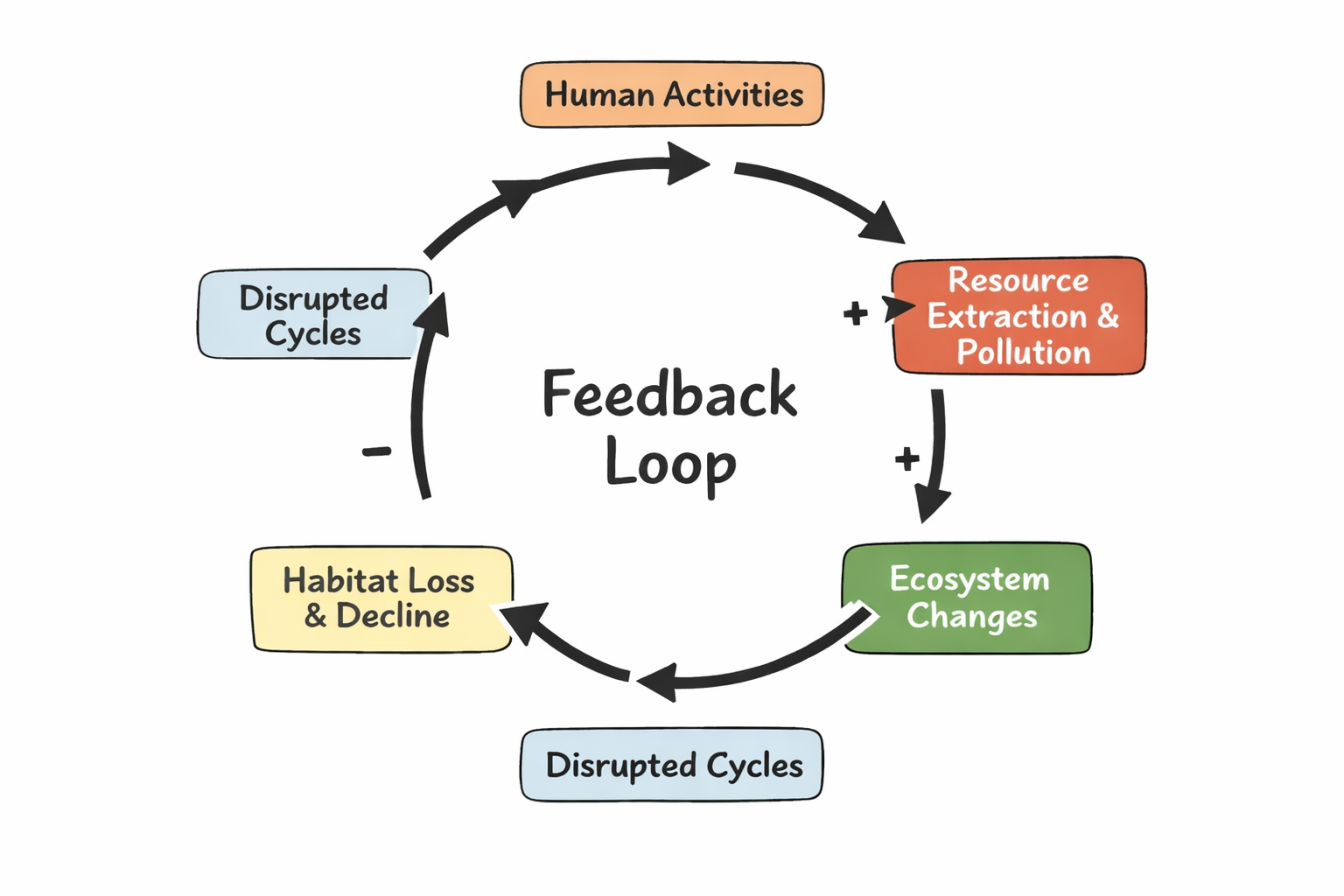
Understanding our world requires seeing the connections between people, communities, and nature. Systems thinking teaches us to look beyond isolated problems and consider the web of relationships that sustain life. In regenerative practice, this means recognizing that ecosystems and human societies are deeply intertwined: healthy forests, clean water, and fertile soil depend on how communities live, organize, and share resources. By mapping feedback loops, flows, and interdependencies, we can design solutions that support both ecological balance and social wellbeing, rather than quick fixes that cause harm elsewhere. True sustainability emerges when we cultivate awareness of these complex systems and act in ways that restore, nourish, and regenerate the whole.

Ecosystems Thinking
To truly understand our impact on ecosystems, we must shift from seeing nature as a collection of separate parts to viewing it as a dynamic, interconnected system. Every forest, river, and soil community is part of feedback loops where changes in one element ripple throughout the whole. Human actions: urbanization, agriculture, pollution, are not isolated events; they alter nutrient cycles, water flows, and species interactions, often in ways that amplify over time. Systems thinking teaches us to map these connections, identify patterns, and notice delays and unintended consequences, helping us anticipate how interventions in one area affect the wider system. By learning to see ecosystems as living networks rather than static resources, we can make choices that restore balance, reduce harm, and support regeneration rather than extraction.
Tools for Systems Thinking
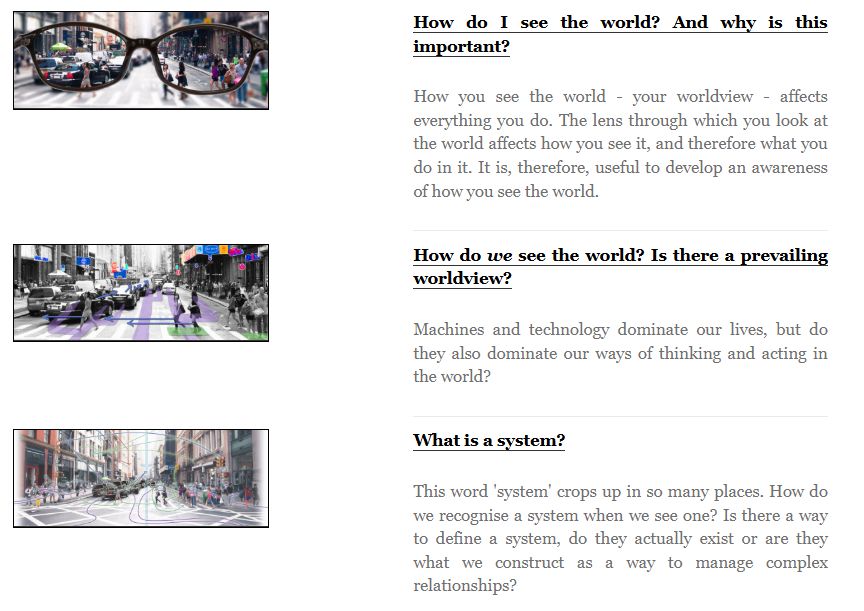
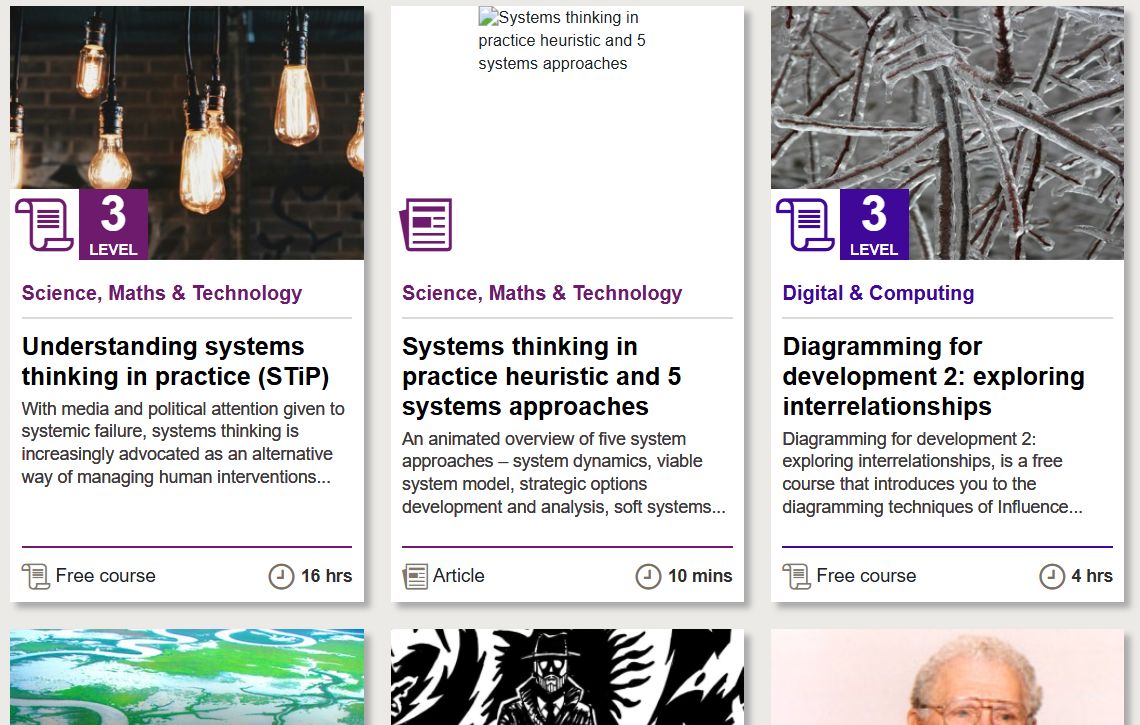
Systems Thinking can be hard for anyone to learn, but it is applicable for everything that we do. Learn how with these tools and small courses.

The Nitrogen Cycle
The nitrogen cycle is the way nitrogen moves through the air, soil, plants, animals, and water, and is essential for life because nitrogen is a building block of proteins and DNA. Most nitrogen in the air cannot be used by living things until special bacteria convert it into usable forms like ammonia, nitrate, and nitrite. These forms cycle through the ecosystem via processes like nitrogen fixation, nitrification, denitrification, and ammonification, involving many kinds of microbes. Human activities, such as using artificial fertilizers and burning fossil fuels, have dramatically altered this cycle, increasing nitrogen in soils and waters and affecting ecosystem health around the world.