The relation between Nature and Humans
Why are we as a collective so alienated to nature? And has it always been this way? What is our place in the ecosystem and in what way do we impact the environment we are living in? These are all questions one might ask when thinking about the relation between nature and us. For finding the answer we have to look within our own nature and look into our psychology.
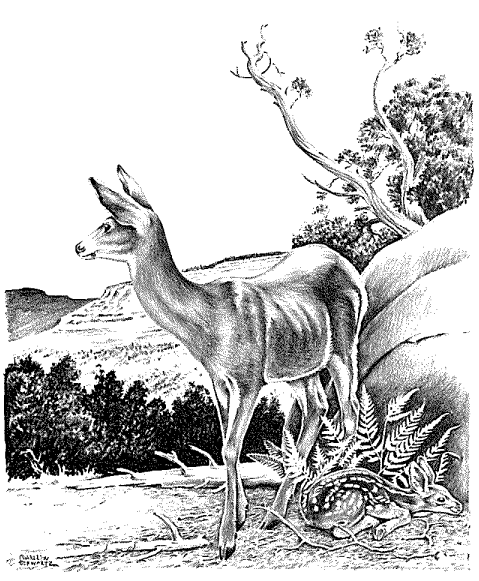
“Thinking Like a Mountain”
by Aldo Leopold
In Thinking Like a Mountain, Aldo Leopold reflects on killing a wolf and realizing the ecological importance of predators. He once believed fewer wolves meant more deer and better hunting, but he came to see that removing wolves causes deer populations to grow beyond what the land can support. Overgrazing then destroys vegetation, weakens the soil, and ultimately damages the entire landscape. Leopold argues that every species plays a vital role in maintaining ecological balance. To “think like a mountain” is to understand nature as an interconnected system in which humans are only one part, not the controllers of it.
Videos related to Humans & Nature research
The Trouble with Wilderness” – William Cronon (1995)
Cronon argues that “wilderness” is not a purely natural refuge, but a cultural invention shaped by romantic and frontier ideals. He shows how the concept of wilderness developed historically, turning once feared landscapes into sacred, sanctuaries. This idealized vision creates a harmful dualism: humans are outside nature. While true nature lies only in remote, untouched places. By idealizing wilderness, we risk neglecting the nature around us: cities, farms, suburban areas; and avoid taking responsibility for our real ecological impact. Cronon calls for a more inclusive environmental ethic that embraces all landscapes, not just the “wild”.
Other essays and literature
Davood Mohammadi Moghadam
A Brief Discussion on Human/Nature Relationship
This essay argues that while humans have always depended on nature for physical and psychological well-being, industrialization has alienated us from the natural world, causing mental health problems that can only be fixed by reconnecting with nature, especially wilderness.
Valentine Seymour
The Human–Nature Relationship and Its Impact on Health: A Critical Review
This article explores how our relationship with nature affects our health by looking at research from biology, psychology, economics, and environmental studies. The author proposes a new model showing that our physical, mental, and social health are all connected to nature through a two-way relationship. The main finding is that modern city living, and industrial lifestyles have disconnected us from nature, which has led to increases in chronic diseases and mental health problems, but reconnecting with natural environments can help improve our overall well-being.
Simon L. Lewis & Mark A. Maslin
Defining the Anthropocene
The article argues that human activity has altered Earth so profoundly that a new geological epoch, the Anthropocene, is warranted. It examines potential start dates, including global colonization after 1610 and nuclear testing after 1964, and evaluates scientific evidence, stratigraphy, and environmental transformation to determine how humanity reshaped planetary systems.